
I’ve learned that the difference between a miserable ride and a confident one comes down to ten core pieces of gear that protect you, keep you connected to your bike, and let you handle whatever the trail throws at you.
You’ll want a snug helmet priced between $80 and $150, gloves with grip like Dakine White Knuckles, shoes that match your pedal choice, and a tire repair kit with plugs and a pump.
Add upgraded brakes, a multitool for adjustments, wearable tech for tracking, and bags to carry essentials.
Each piece builds your confidence on the trail.
Protect Your Head: Choosing a Helmet That Fits Right
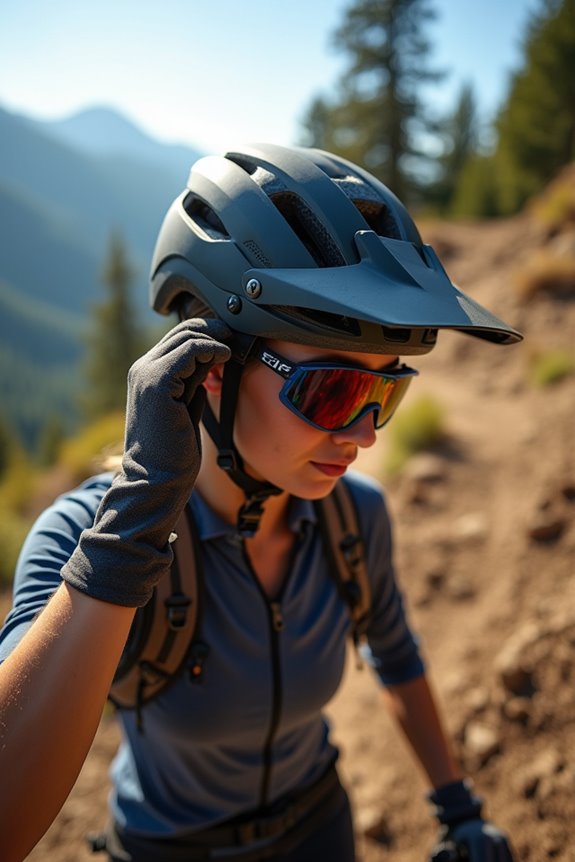
Why do so many mountain bikers skip the helmet? I think we underestimate how much protection matters until something goes wrong. A good helmet reduces head injuries by about 50%, which honestly makes sense once you’re riding technical terrain.
Helmet fit matters more than the price tag. You want something snug but comfortable, sitting level on your head. Look for safety features like MIPS technology or alternatives such as WaveCel, which absorb impact better. Trail helmets offer visors and extra coverage, while XC models stay light for cross-country riding.
Spend around $80–$150 on a quality helmet you’ll actually wear. Modern helmets balance ventilation with protection effectively, so you’re not overheating on warm days. After any crash, replace it immediately because helmets protect against only one impact.
Protect Your Hands: Gloves for Grip and Impact Safety
When’s the last time you really thought about your hands while riding? I didn’t either until I crashed and wished I’d invested in proper gloves. Your hands need serious protection out there.
The Dakine White Knuckle gloves are what I reach for because they provide both grip and real safety. The synthetic suede palm keeps me locked onto my pedals and brakes, even when conditions get sketchy. What stands out most is the hidden rain shell. It stays tucked away until weather turns nasty, then deploys instantly. The Gore-Tex keeps moisture out without trapping heat.
These gloves work from the 30s through the 50s, so they’re versatile enough for most riding seasons. They’re built tough, which means you’re covered whether you’re shredding or just cruising local trails.
Choose Pedals and Shoes for Your Riding Style
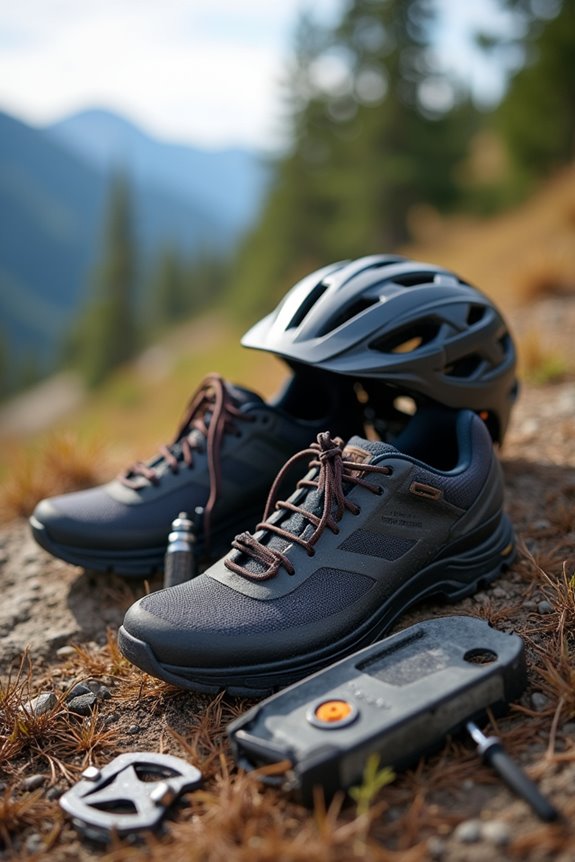
Your hands are locked in now, but your feet need the same attention. I’ve found that flat pedals and clipless pedals each have their place, depending on where you’re riding and how confident you feel.
Flat pedals let you wear regular shoes and bail quickly if things get sketchy. I love them for learning because there’s no panic about clipping out. If you want sticky grip and durability, Five Ten Freerider Pro shoes are worth the investment, though Giro Latch works great too.
Flat pedals let you bail quickly and wear regular shoes—perfect for learning without clipout panic.
Clipless pedals keep your foot positioned perfectly for efficient pedaling once you’re comfortable. Sure, you’ll probably tip over learning to clip in and out; I did. But most riders find it’s worth the learning curve.
Your choice really depends on your terrain and confidence level. Pick what makes you feel secure.
Master Tire Repairs: Tools That Actually Work On-Trail
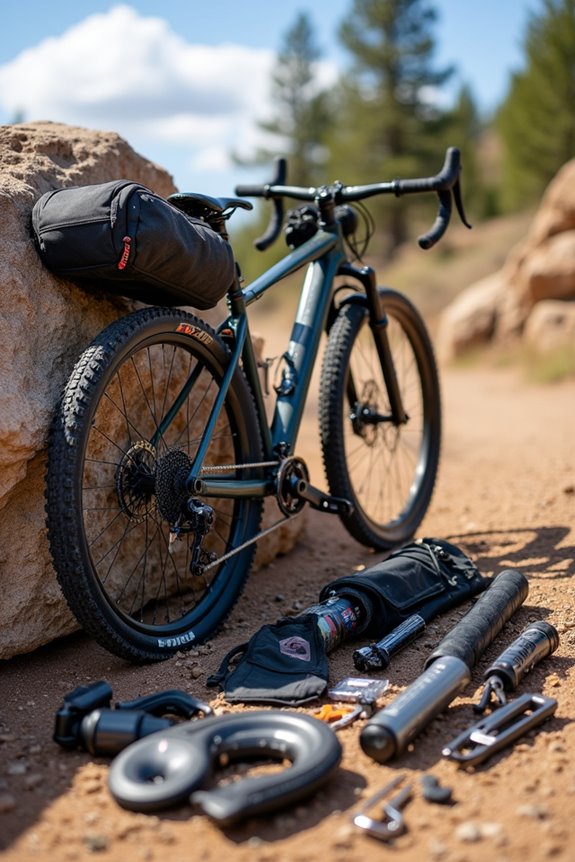
When you’re miles from the trailhead and a sharp rock punctures your tire, the Dynaplug Pill system proves valuable because those five plugs handle different hole sizes without forcing you to carry a dozen repair options. The metal head keeps plugs seated long-term, so you’re not babysitting a sketchy temporary fix for the rest of your ride. That reliability means you can actually trust your repair and keep pedaling instead of worrying whether your tire will hold.
Dynaplug Plug System Advantage
How many times have you watched a fellow rider pull out a tire plug kit that looked like it belonged in a junk drawer? The Dynaplug tire plug system changes everything on the trail.
This tool keeps plugs seated instead of watching them slip out halfway through your ride. The metal head does the heavy lifting, gripping plugs firmly so they stay put when you need them most. Whether you’re dealing with pinch flats or jagged gashes, Dynaplug handles varying hole sizes with multiple plugs included.
What sets it apart is reliability when it matters. You get quick, effective on-trail repairs with durable components built for real MTB conditions. That means less trail downtime and more momentum, keeping you riding with your crew instead of stranded and frustrated.
On-Trail Repair Reliability
Since most of us ride trails where help is nowhere nearby, having the right repair tools determines whether you finish your ride or walk out. A solid on-trail repair kit keeps things simple. You need tire plug tools like the Dynaplug Pill, a spare inner tube, tire levers, and a hand pump or CO2 cartridge. Switching to tubeless tires with sealant proved effective for me; they seal small punctures automatically.
| Tool | Purpose | Why It Matters |
|---|---|---|
| Tire Plug Tools | Seal medium holes | Handles pinch flats quickly |
| Tubeless Repair | Self-sealing sealant | Prevents flats before they occur |
| Hand Pump | Reinflate tire | Gets you rolling again |
Being prepared keeps you confident on the trail.
Upgrade Your Brakes for Confident Stopping Power
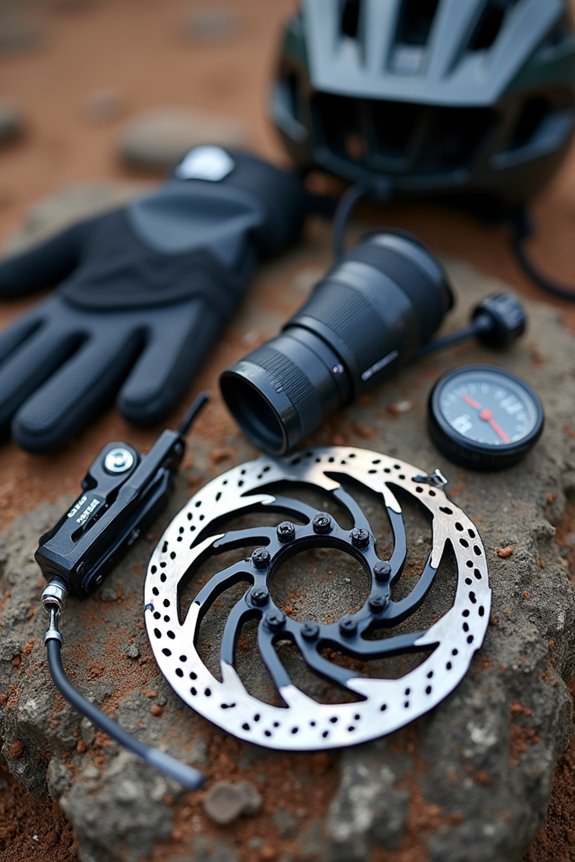
Why do so many riders overlook their brakes when thinking about upgrades? I think we focus on flashy stuff instead of what actually keeps us safe. But here’s the thing: upgrading your brakes delivers real stopping power that changes how you ride.
I switched to SRAM Maven Ultimate brakes, and they’ve transformed my confidence on technical terrain. Yes, they’re heavier than lighter options, and at $330 per brake they represent a real investment. However, they handle varied conditions better than my old setup.
These brakes need periodic pad replacement and bleeding maintenance, which honestly isn’t bad. The durability impressed me; they’ve weathered plenty of impacts. Pairing them with other drivetrain upgrades created a system that gives me control I actually trust on diverse mountain trails.
Boost Performance: Drivetrain Upgrades That Matter
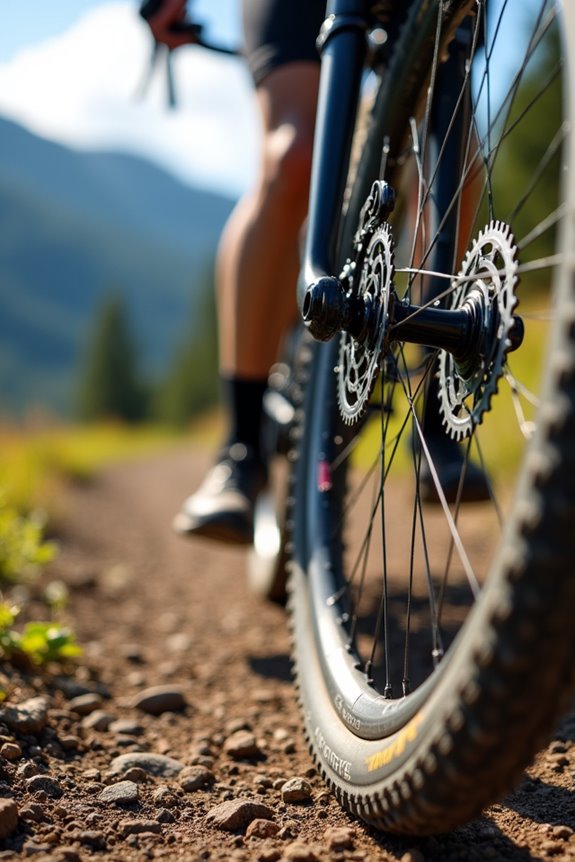
I appreciate the Shimano XTR Di2 because it shifts smoothly and transfers between bikes without the complications other systems create. The reliability justifies the investment; you get thousands of miles from equipment built to perform, and the $985 upgrade kit costs significantly less than more complex alternatives. If you want to improve your drivetrain performance, a quality upgrade delivers better results than pursuing every new accessory on the market.
Shimano XTR Di2 Excellence
When you’re ready to seriously upgrade your drivetrain, the Shimano XTR Di2 deserves your attention. I’ve found this electronic drivetrain shifts smoother than anything else I’ve tried, whether I’m tackling rough trails or switching between bikes. The complete setup runs $2,030, though you can grab an upgrade kit for $985 if you’re already running compatible components.
What I appreciate most is how natural it feels. You’re not wrestling with cables or dealing with setup complications. The cross-bike versatility means I can transfer components between my bikes without buying duplicate parts. After thousands of miles across different terrains, this system has held up well. It’s the kind of upgrade that noticeably changes how you ride.
Drivetrain Compatibility And Transfer
Drivetrain compatibility becomes your best friend on the trail when you’re swapping bikes mid-tour or upgrading components. You’ll want systems that work together without a hitch. Shimano XTR Di2 makes this genuinely easier than alternatives because it requires fewer parts, which means less fiddling during maintenance and quicker transfers between your rigs.
Compatible drivetrains reduce friction, both literally and logistically. You’re not wrestling with mismatched cables or spending hours troubleshooting. Transfer reliability matters when you’re deep in the backcountry, and drivetrain compatibility ensures your setup won’t betray you across thousands of miles on varied terrain.
Real-world testing shows this approach builds on-ride confidence. You’re investing in a system that actually works together, not just parts that technically fit.
Track Your Rides: Wearable Tech for Training and Navigation
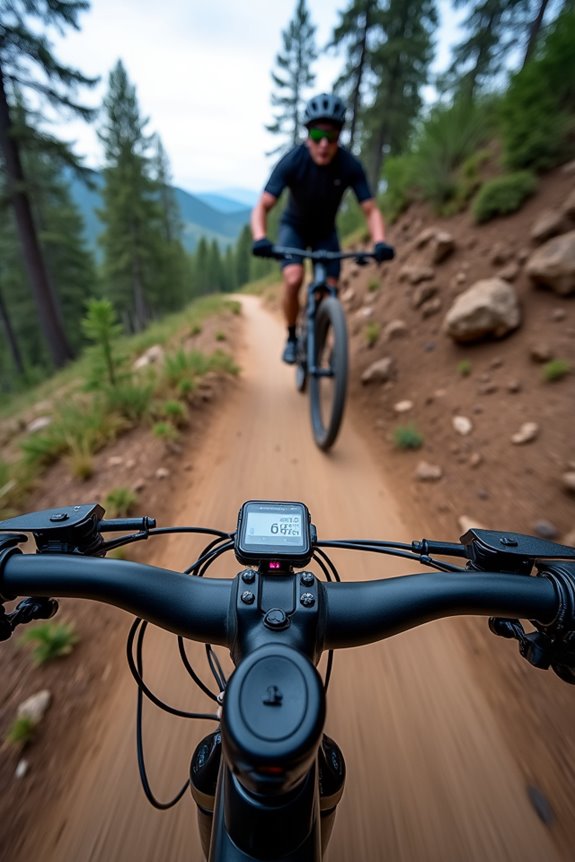
Why do so many riders leave their phones at home but strap a smartwatch to their wrist? Wearable tech like the Garmin Forerunner 970 transforms how I train and navigate trails. This device tracks my heart rate, pace, and distance while offering built-in GPS navigation comparable to bar-mounted units.
Wearable tech like the Garmin Forerunner 970 transforms training and trail navigation with built-in GPS and heart rate tracking.
Key features that deliver real value:
- Continuous health monitoring throughout rides and recovery days
- On-watch reports that sync with app analysis for deeper insights
- Music and notifications without carrying your phone
- Long battery life for full-day adventures across XC to trail riding
The watch integrates training data into a complete picture of your progression. You’ll appreciate the durability when tackling technical terrain, knowing your stats stay safe on your wrist.
Carry Essential Gear: Handlebar Bags and Hip Packs
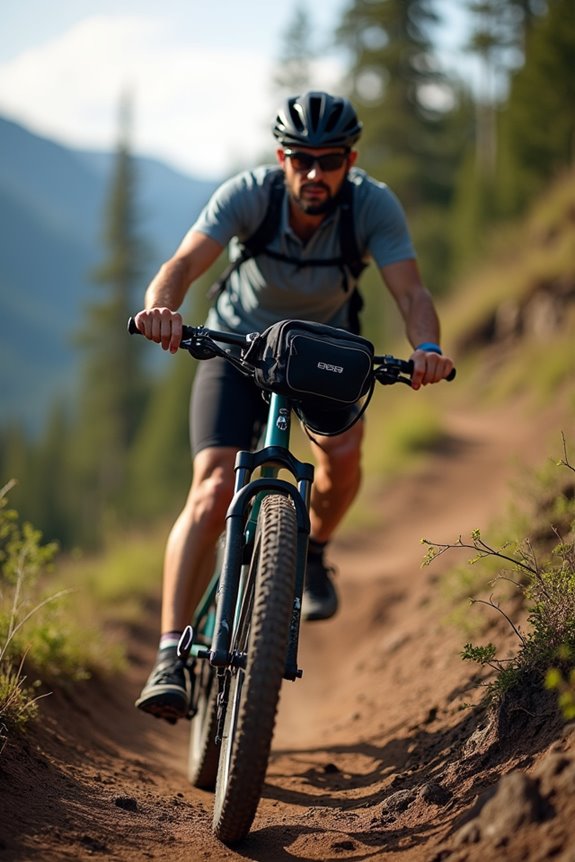
When I’m heading out on the trail, I’ve learned that how I organize my gear makes a real difference, and that’s where handlebar bags and hip packs come in. A good handlebar bag keeps your essentials within reach: tools, snacks, and small items. A comfortable hip pack lets you move freely without feeling weighed down. I value having both because they let me carry what I need without bouncing around or digging through one overstuffed pack.
Handlebar Bag Organization
Ever noticed how a good handlebar bag can transform a ride? I’ve learned that smart organization keeps my essentials accessible and protected when I’m out on the trail. The Oveja Negra 925 costs $110 and provides five liters of space with thoughtful compartments.
What makes this handlebar bag stand out is its durability. After six months of gravel riding, mine shows zero wear, unlike cheaper alternatives I’ve seen fail after one ride. The organization system includes:
- Main compartment for larger items like snacks and tools
- Mesh Velcroed front pocket for quick-access necessities
- Two side pockets for smaller gear and phone
- Interior zippered pocket for keeping valuables secure
I value gear that lasts and keeps me prepared for whatever the ride throws my way.
Hip Pack Comfort Features
A good hip pack does something handlebar bags can’t: it keeps your essentials right where your body is, distributing weight evenly so you’re not fighting balance issues on technical terrain. The High Above Venture 3D hip pack prioritizes comfort with its squishy, grippy 3D-printed rear panel that hugs your lower back during rides. That accessibility matters because you can grab your phone, wallet, or snacks without stopping. The magnetic buckle closure works well when you’re wearing gloves and fumbling around. Your hip pack becomes a trusted companion that lets you focus on the trail instead of worrying about gear shifting around. It’s designed for riders who want everything they need within arm’s reach, making each ride smoother and more enjoyable.
Fix Common Problems: The Multitool Every Rider Needs
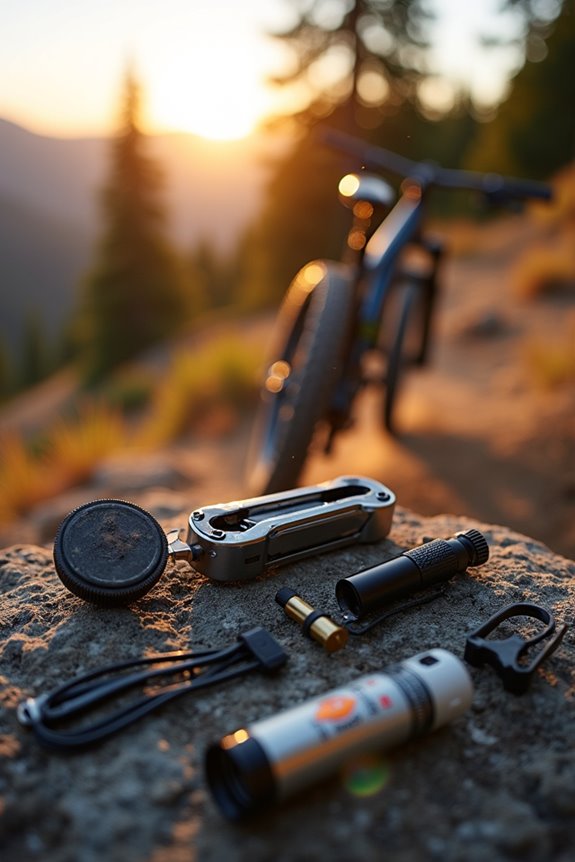
Out on the trail, you’ll inevitably face a moment where something needs adjusting: your derailleur’s out of whack, your handlebars have twisted, or a brake lever needs a quick tweak. That’s when a reliable multitool becomes your best friend.
Out on the trail, when your derailleur’s out of whack or handlebars twist, a reliable multitool becomes your best friend.
A solid multitool doesn’t need to do everything. Focus on what actually matters for on-trail repairs:
- Hex keys (3–6 mm, 4–6 mm, and 8 mm) for brake and derailleur adjustments
- T25 Torx for component tweaks
- Chain tool or breaker for dropping your chain back on
- Spare quick-link to save your ride if things get messy
Pair your multitool with gloves for better grip and hand protection. You’re not trying to be a mechanic out there. You’re just keeping your bike rideable so you can keep riding with your crew.
Consider Your Next Bike: When to Upgrade or Go Electric
You can only tweak and adjust so much before you’re staring at the real question: do you keep pouring money into your current bike, or is it time to think about something new?
I’ve learned that chasing every upgrade leads nowhere. Instead, I focus on high-impact improvements like better brakes and tires that actually change how I ride. Before dropping cash on upgrades, I check compatibility with what I’ve got. A Shimano XTR Di2 drivetrain transfers easily between bikes, which matters if you’re considering swapping gear later.
Going electric changes everything. An eMTB like the Specialized Turbo Levo 4 feels natural but weighs over fifty-five pounds. You’ll need to weigh your riding style, maintenance demands, and whether you’re ready for that investment. Sometimes upgrading makes sense. Sometimes starting fresh does too.