
I start with a breathable cotton or merino wool base layer, then add a mid-weight sweater I can remove if needed. A lightweight trench coat or denim jacket goes on top, giving me options as temperatures shift. I pair everything with dark-wash jeans and cushioned flats for support. The key to success involves choosing fabrics that work together, such as a ribbed knit under a smooth trench, and keeping one bold accessory like a scarf or leopard flats to tie the outfit together. Read on for the specifics that will improve your layering approach.
Start With a Breathable Base for 50-Degree Weather
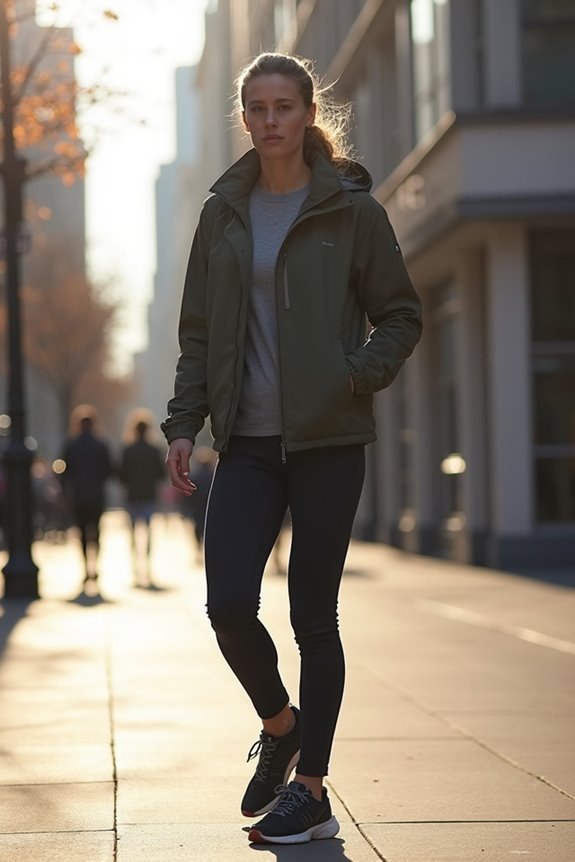
Why does layering matter when you’re getting dressed for 50-degree weather? Because your body temperature shifts throughout the day, and you’ll want to adjust without feeling trapped in heavy fabric.
I start with a breathable base like a lightweight tee or thin knit. This foundation keeps me comfortable and prevents that clammy feeling when I’m moving around. Cotton or merino wool blends work well since they manage moisture naturally.
Next, I add a mid-layer such as a cardigan or light sweater for adjustable warmth. The benefit of layering is that I can remove it indoors or add it outside. Finally, I choose versatile transitional outerwear like a trench or denim jacket that pairs with everything in my closet.
This approach means I’m never too hot or cold. Semi-fitted silhouettes let air flow while keeping a put-together appearance.
Layer a Mid-Weight Sweater for Warmth Without Bulk
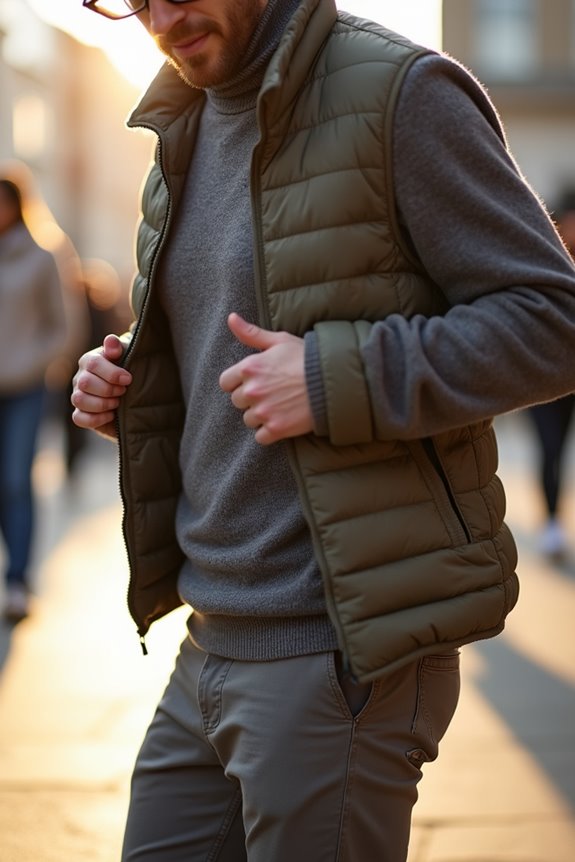
I’ve found that a mid-weight sweater works well for 50-degree weather because it provides real warmth without the bulk or overdressed feeling. When choosing a sweater, I look for breathable materials like merino or cotton blends that respond to temperature changes throughout the day, and I prefer slim cuts with minimal seams for easy layering under a jacket. The crew-neck or half-zip style is key; it allows me to wear a tee or blouse underneath and adjust my comfort level without completely changing my outfit.
Sweater Layering Fundamentals
When you’re getting ready for 50-degree weather, here’s what works best: layering a mid-weight sweater under a light jacket gives you the warmth you need without feeling bulky or restricted. This approach lets you adapt throughout the day. If you step indoors, you can simply remove the lightweight outerwear and stay comfortable.
The key is choosing the right sweater. Fine-knit textures in merino wool or cotton blends breathe well and regulate temperature naturally. Chunky knits don’t work here; they bunch awkwardly under jackets and limit your movement.
This layering strategy keeps you warm during those unpredictable days when temperatures fluctuate. You’re not overdressed or underdressed. You’re in the right position. That’s what you should aim for every time.
Texture And Weight Selection
Now that you’ve got the layering concept down, let’s talk about picking the actual pieces that’ll work together. The right mid-weight sweater transforms your whole outfit. You’ll want fabrics like merino wool or cotton blends that feel soft without clinging to your body. The key is choosing textures that play nicely with your outerwear.
| Sweater Texture | Best Paired With | Why It Works |
|---|---|---|
| Ribbed knit | Smooth trench | Prevents shoulder bulk |
| Cable knit | Light wool coat | Adds dimension cleanly |
| Solid medium-weight | Lighter jacket | Creates streamlined look |
| Cotton blend | Casual overshirt | Breathes without sagging |
| Merino wool | Structured blazer | Maintains fitted silhouette |
Fitted or semi-fitted sweaters tuck neatly into your jeans, reducing that puffy jacket look. This layering approach keeps you warm while looking intentional.
Styling With Lightweight Bases
Why does a mid-weight sweater work so well for 50-degree weather? It solves the layering puzzle without creating bulk under your jacket. When dressing for transitional temperatures, a sweater in merino wool or fine knit cotton breathes while keeping you warm, hitting that temperature sweet spot.
I pair mine with neutral bases like gray, navy, or beige. These lightweight bases create a streamlined silhouette under a trench or light coat, which feels more put-together than most days warrant. A slightly boxy or slim fit works best, depending on your preference.
Then I add lightweight accessories like a scarf or sunglasses. This approach lets me adapt as temperatures fluctuate without feeling overdressed or weighed down by heavy layers. It’s the kind of warmth that actually works.
Choose a Lightweight Jacket or Trench as Your Outer Shell
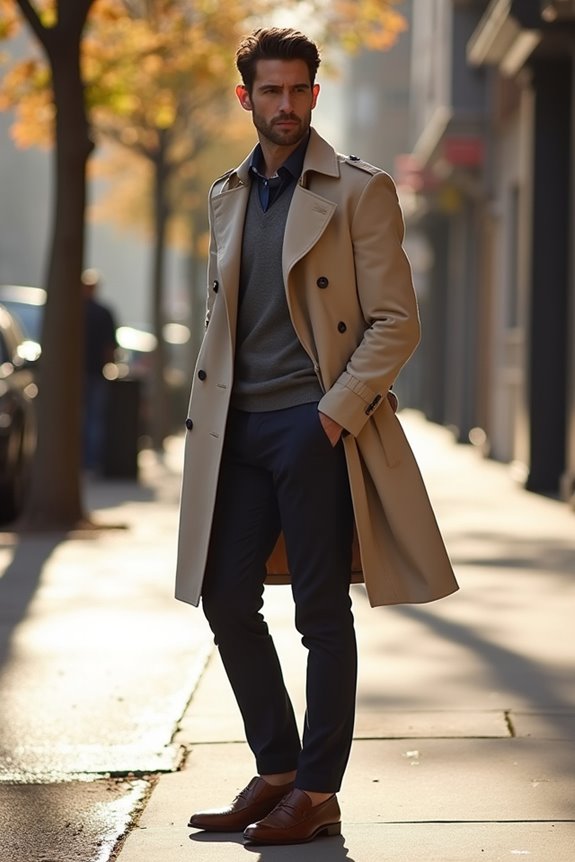
How do you find that sweet spot between staying warm and not overheating? A lightweight jacket or trench coat works perfectly for this. These pieces give you just enough warmth without the bulk from heavier coats.
A trench pairs well with a sweater underneath. It creates that put-together vibe you’re going for. A light wool coat does the same thing; it’s functional without weighing you down on milder days.
The key is layering smartly. Start with a tee, add your sweater, then top it with that structured jacket. This approach keeps you comfortable whether you’re moving around or sitting still. You’re not wrestling with extra fabric, and you’ll feel confident about managing your temperature needs.
Pair With Versatile Bottoms Like Jeans or Leggings
When you’ve got your jacket sorted, the right bottoms matter in 50-degree weather. I pair my trench with dark-wash jeans for that classic spring feel, or switch to light-wash denim when I want something brighter. Leggings work well too, especially when I’m layering with a long-sleeve tee underneath for extra warmth.
Rolling or cuffing your jeans creates a lighter feel that won’t make you overheat. It’s a practical adjustment. Dark denim provides a refined appearance, while lighter washes feel more seasonal and fresh.
The key is selecting bottoms that let you adjust your comfort level. Whether you choose jeans or leggings, pair them with your lightweight jacket for that spring style you’re going for.
Choose Footwear That Supports Comfort and Movement
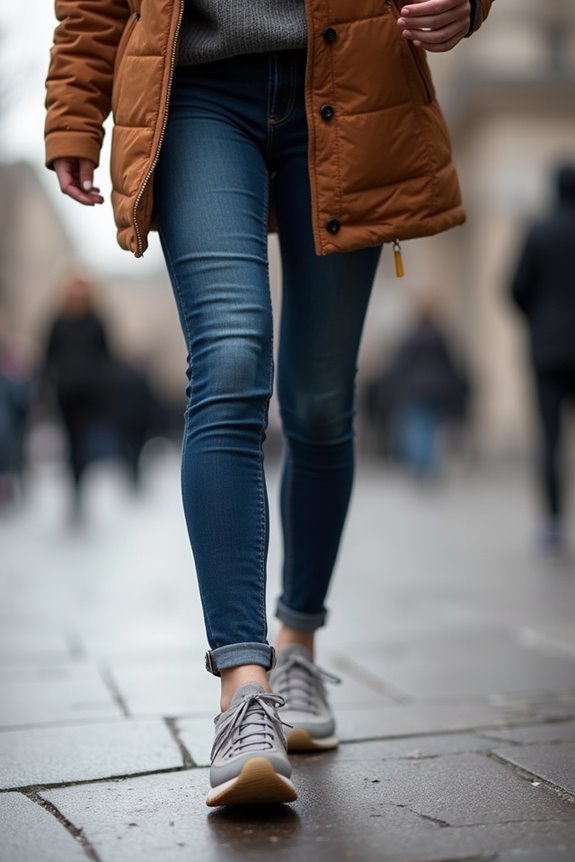
Once you’ve got your bottoms and jacket sorted, your shoes determine how comfortable you’ll actually feel. The right footwear can transform your entire day when temperatures hover around fifty degrees.
I pair cushioned flats or block-heel loafers with both jeans and trousers because they offer the versatility I need without sacrificing comfort. Clean white sneakers work too if you want something more casual. The key is choosing shoes with proper arch support so your feet don’t protest by day’s end.
If you’re moving between heated indoors and chilly outdoors, grab sneakers with breathable linings to prevent that damp, uncomfortable feeling. On rainy shoulder-season days, a rubber sole with slight tread keeps you stable on slick surfaces. Low-profile ankle boots work well too, maintaining a polished spring vibe without bulk.
Adjust Layers as Temperature Shifts Throughout the Day
I find that 50-degree weather demands a flexible approach to layering because the temperature rarely stays consistent throughout your day. You’ll want to start with a lightweight base layer like a tee or thin sweater, then add a jacket or trench that you can easily remove as things warm up, and keep a scarf handy for those moments when the chill sneaks back in. The key is choosing pieces you can shed or add without stuffing your bag full, so you stay comfortable whether it’s crisp at dawn or mild by afternoon.
Layering For Temperature Control
How do you dress for a day when morning feels chilly but afternoon might surprise you with warmth? Smart layering works well for temperature control in 50-degree weather.
Start with a lightweight tee or printed cotton top as your base. Add a medium-weight sweater or cardigan you can easily remove when you head indoors or the sun kicks in. This approach keeps you comfortable without overheating.
For outerwear, a trench coat or light wool coat offers a polished appearance while staying breathable. If you want structure, try a utility jacket or blazer; they maintain a put-together look while adapting to temperature changes throughout your day.
Pair these with loafers, ballet flats with socks, or thin sneakers. You’ll handle cool mornings and warmer afternoons with confidence.
Strategic Piece Removal Strategy
The real trick to staying comfortable in 50-degree weather isn’t just putting on the right clothes; it’s knowing exactly when and what to take off. I’ve learned that a smart removal sequence keeps me from overheating as the day warms up.
Here’s what I do:
- Unbutton my sweater first to release heat without fully removing it
- Unzip my trench coat or light wool coat once temperatures climb
- Switch to a lighter jacket if I’m still chilly
- Keep transitional outerwear accessible in my bag
The key to successful layering is staying flexible. I start my morning bundled, then gradually shed pieces as needed. This removal strategy means I’m never stuck choosing between comfort and looking put-together. It’s honestly simpler than it sounds once you practice it a few times.
Adaptable Outfits For Fluctuations
When you’re getting dressed for 50-degree weather, your outfit works best when it can shift with the day instead of staying locked at one temperature level. I start with lightweight outerwear like a trench coat over a cardigan, which gives me flexibility as conditions change. If it warms up by afternoon, I simply remove the trench and roll my sleeves. When it cools down again, the layers work together seamlessly.
The foundation of adaptable outfits is keeping a lightweight tee or striped button-down within reach. This backup piece lets me adjust quickly without appearing to struggle with temperature changes. By layering strategically, you stay comfortable while maintaining control of your appearance throughout the day.
Add a Scarf or Lightweight Accessory for Extra Warmth
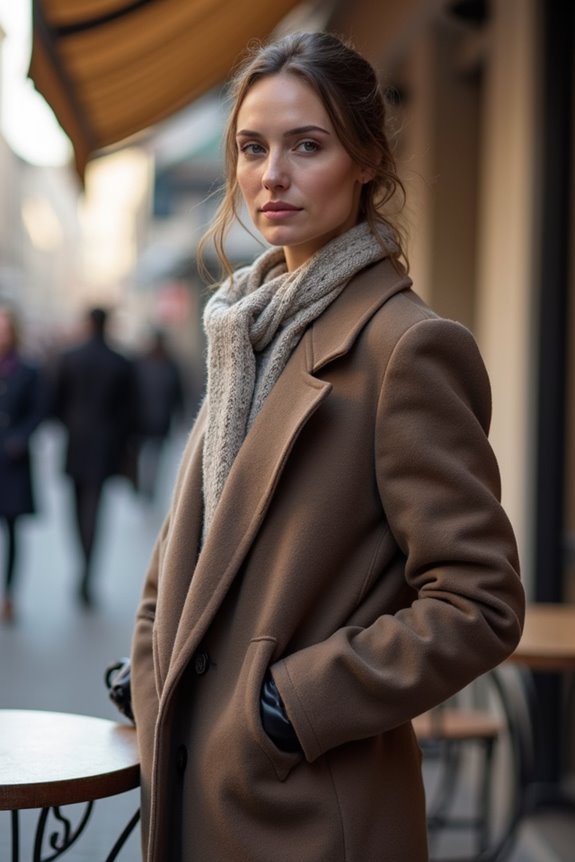
Why not try wrapping a scarf around your neck when 50-degree weather hits? A simple accessory transforms my whole outfit while keeping me genuinely warm. A lightweight scarf in cotton or silk blends gives me that extra layer without making me look bulky.
A lightweight scarf transforms your 50-degree outfit while keeping you warm without bulk.
Here’s what makes scarves work so well:
- Multiple styling options: I can drape, knot, or wrap it depending on how cold I feel that day
- Easy coordination: Neutral colors like black, beige, and gray match literally everything in my closet
- Polished appearance: Paired with a trench or lightweight jacket, I get that Parisian vibe I’m after
- Adjustable warmth: I control my comfort level without changing my whole outfit
This layering strategy keeps me comfortable through temperature swings.
Refine Your Look With Seasonal Details
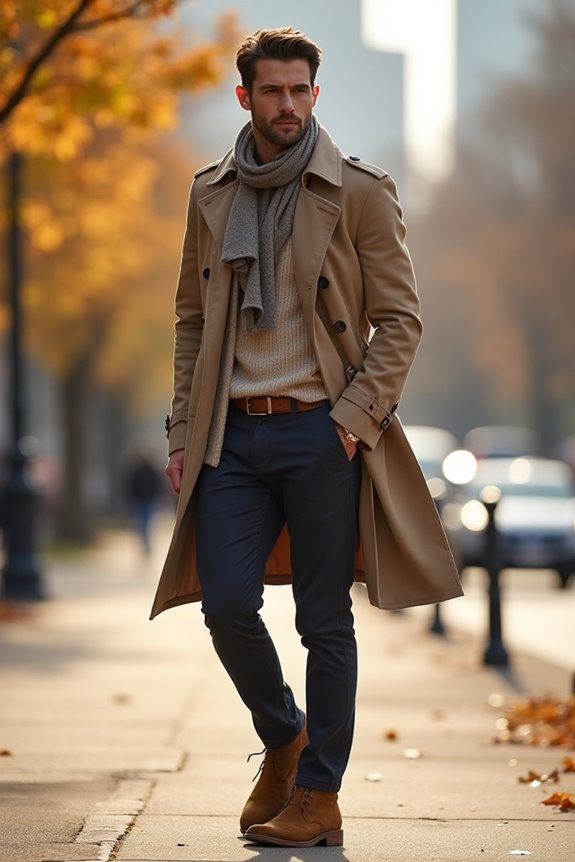
When you’re dressing for 50-degree weather, a striped top or seasonal print makes your outfit feel fresh and intentional rather than thrown together. Pairing stripes with a light jacket gives you that relaxed Parisian quality, and it’s more interesting than wearing solid colors all spring. A structured bag and sunglasses pull everything together; those details are what separate a comfortable outfit from one that looks put-together.
Stripes and Seasonal Prints
One thing I’ve found that lifts a 50-degree outfit is trading in a plain button-down for a striped top. It’s like adding spring to your wardrobe without much effort. Stripes and seasonal prints help me feel put-together while staying practical for the weather.
Here’s what I do to make these patterns work:
- Pair striped tops with barrel jeans (I size up) and ballet flats for a balanced look
- Layer a light wool coat over my striped pieces for warmth without bulk
- Mix seasonal prints with a light jacket or trench to extend the polish of an outfit
- Keep colors soft and fresh to match the spring mood I’m going for
This approach helps me maintain a cohesive wardrobe while transitioning through unpredictable temperatures. The patterns feel intentional, not random.
Accessories Define Spring Style
How you finish a 50-degree outfit matters just as much as the foundation pieces. Accessories are what really make spring style feel intentional and refined. A structured bag keeps things looking put-together, while sunglasses and ballet flats add that relaxed touch we’re all after. When I’m layering for cooler mornings, I’ll add a lightweight scarf or belt to define my waist and tie everything together. Metallic accents in a bracelet or earrings bring just enough shimmer without overdoing it. The key is choosing pieces that work with your base layers rather than against them. These small touches create that refined spring vibe we’re going for, making you feel like you truly belong in the season.
Choose a Neutral Base With One Bold Accent
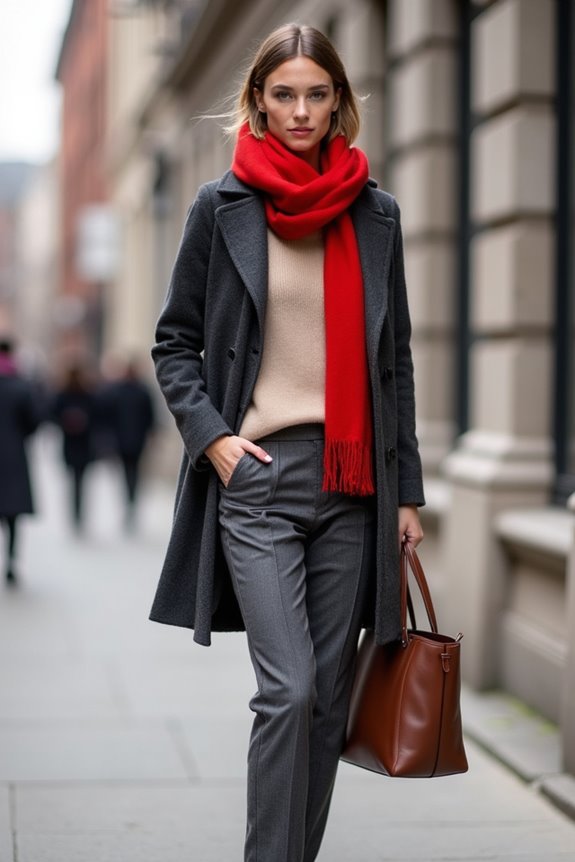
Why does 50-degree weather call for such a smart approach to color? I’ve learned that keeping things simple actually makes getting dressed easier, not harder. When I start with a neutral base, I create a canvas that lets one bold piece shine without clashing.
Here’s how I nail this balance:
- Start with a beige trench or light wool coat as your neutral base
- Add one standout piece like leopard print flats or a bright scarf
- Layer a lightweight top with a cardigan underneath for warmth
- Choose light wash or white jeans to keep everything spring-ready
I love how this approach feels intentional. My neutral foundation keeps me looking polished while that single bold accent prevents the outfit from feeling boring. It’s the layering trick that lets me stay warm without sacrificing style.
Layer Different Fabrics for Visual Interest and Dimension
While nailing that neutral-and-bold color combo keeps your outfit from feeling flat, the real magic happens when you mix different fabrics together. Layering textures is how you turn a basic outfit into something that actually catches people’s attention. Try pairing a lightweight wool cardigan over a cotton tee. You’ll get warmth without that bulky feeling, which works perfectly for transition weather. Or throw a denim jacket over a knit tee for visual interest that feels totally natural. The key is mixing materials with different weights and sheens. When you combine cotton, wool, and maybe some leather accents, you create dimension that makes your whole look feel more intentional. It’s one of the easiest ways to look like you actually put thought into getting dressed.