
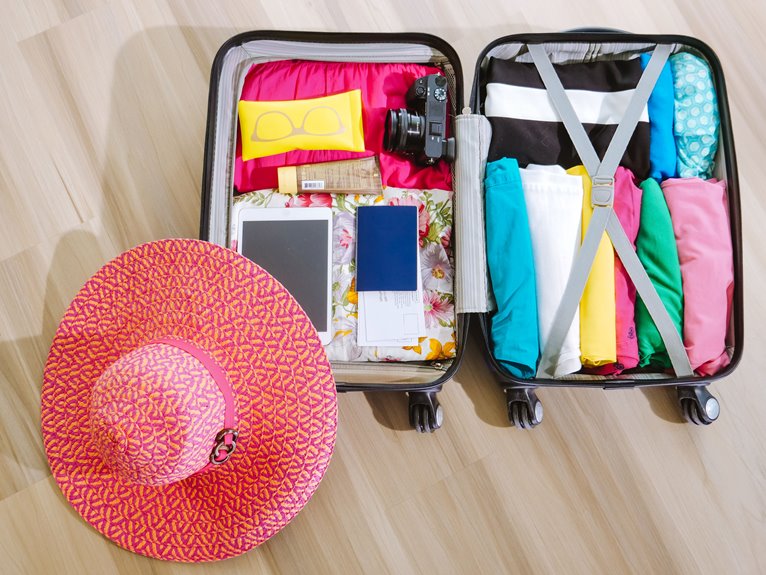
I’d pack a waterproof jacket first; it’s your main defense against Ireland’s coastal rain. Layer lightweight pieces like a cotton tee under a cardigan since mornings hit the high 40s but afternoons warm up. Grab quick-dry pants, waterproof hiking shoes with serious grip, and a packable fleece for cool evenings. Don’t skip sunscreen and sunglasses. May’s long daylight brings stronger UV than you’d expect. Wool base layers keep you warm even when damp, and honestly, skip the umbrella—it just gets in your way. Each item serves a specific purpose that will keep you comfortable throughout your trip.
Pack a Waterproof Jacket: Your Best Defense Against May Rain
Why does Irish weather feel like it can’t make up its mind? One minute you’re walking in sunshine, the next you’re dodging rain showers. That’s exactly why a waterproof jacket belongs at the top of your packing list for May.
Ireland’s coastal climate brings rain unexpectedly, even on supposedly nice days. A foldable, packable waterproof jacket handles rapid weather changes without weighing down your bag. You’ll stay dry exploring cities, hiking trails, or visiting local pubs.
Skip the umbrella. Jackets work better when you’re moving around. Choose ultrafine, water-repellent outerwear that keeps you comfortable without bulk. Your May weather in Ireland doesn’t have to catch you unprepared. One solid waterproof jacket will serve you well throughout your trip.
Layer Lightweight Pieces for May’s Temperature Swings
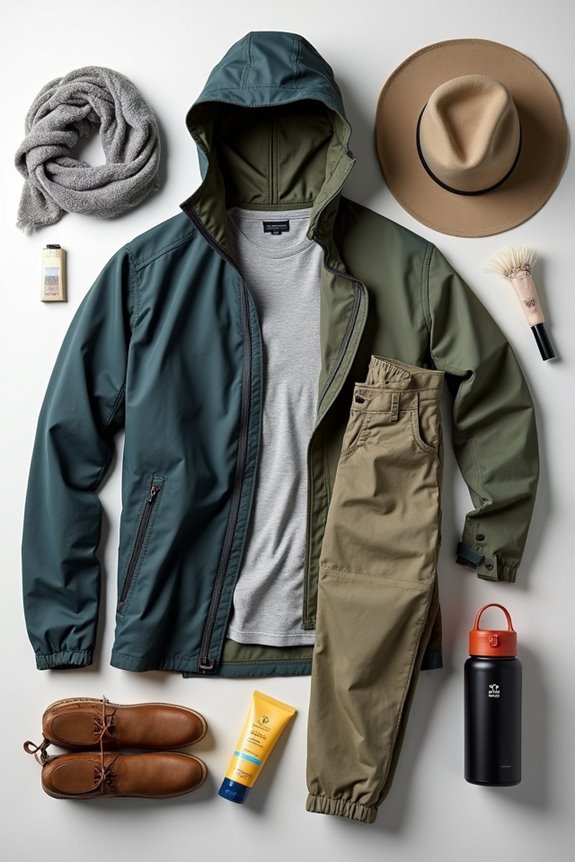
I’ve found that building your outfits in layers works well for May’s unpredictable weather. Start with a breathable base layer like a cotton t-shirt, add a wool or knit mid-layer for warmth, and top it off with a lightweight vest or jumper. This approach lets you adapt as the day shifts from cool mornings to warmer afternoons.
Quick-dry fabrics are practical here since May showers can catch you off guard. You’ll want pieces that won’t leave you damp and uncomfortable for hours. The benefit of this strategy is that you can remove or add layers without looking like you’re carrying your entire wardrobe around Ireland.
Base Layers for Comfort
Starting with the right foundation keeps you comfortable in May’s unpredictable Irish weather. Quality base layers matter when temperatures swing between the high 40s and mid-50s Fahrenheit.
Moisture-wicking materials pull sweat away from your skin during city walks and outdoor adventures. Pair these with quick-dry fabrics so you stay comfortable if showers arrive unexpectedly. Cotton tees or ribbed options work well as your starting layer.
Layering offers flexibility. Throw on a light sweater or shirt over your base layer when mornings feel chilly, then remove it as afternoon warmth arrives. This approach lets you adjust without feeling restricted or uncomfortable, avoiding bulky jackets throughout the day.
Mid-Layer Warmth Options
Once you’ve got your base layers sorted, build on that foundation with pieces that handle May’s mood swings without weighing you down. A lightweight jumper or cardigan works well because they’re easy to slip on or tie around your waist when temperatures shift throughout the day. A packable fleece compresses small but delivers real warmth during cool mornings and evening walks. The key is choosing mid-layer pieces in breathable fabrics that won’t trap moisture. Pair these with a waterproof rain jacket for sudden showers. Think neutral colors like cream, gray, or navy so everything works together. You’re not overpacking; you’re staying comfortable while fitting everything in your bag. That’s the Ireland May strategy.
Quick-Dry Fabric Benefits
Why does quick-dry fabric matter so much for an Ireland trip in May? Layering lightweight quick-dry pieces is essential to staying comfortable when weather shifts throughout the day.
Quick-dry tops and base layers wick moisture away from your skin, keeping you dry during rain showers and windproof activities. Pair these with breathable quick-dry pants or leggings for long city walks and hiking adventures. You avoid sweating in heavy, damp clothing, which makes a real difference in how you feel.
Quick-dry fabrics also reduce odor buildup on multi-day trips, which means less laundry stress. When you layer these materials strategically, you adapt easily to cool mornings and warmer afternoons. This approach aligns with what experienced travelers actually wear in Ireland’s unpredictable May weather.
Choose Walking Shoes Built for Wet Cobblestones and Trails
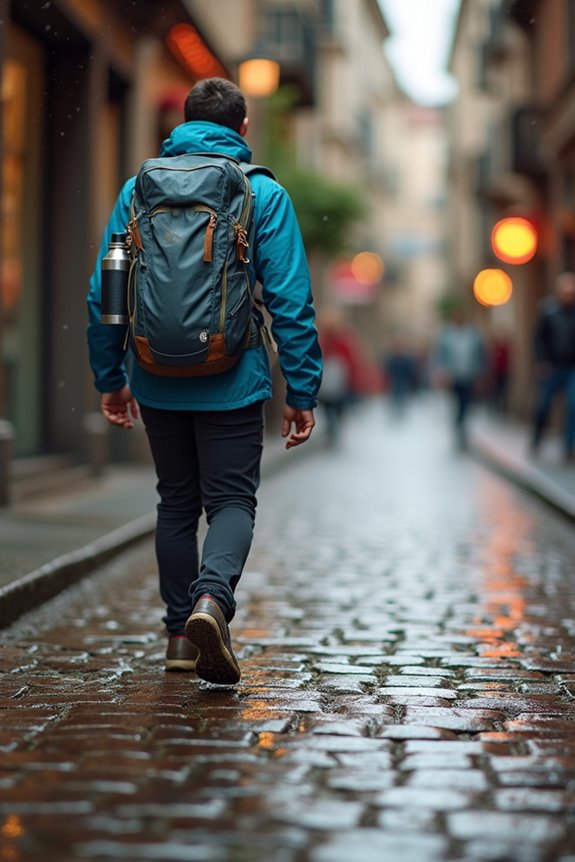
When navigating Ireland’s wet cobblestone streets and muddy trails, invest in waterproof shoes with serious grip and traction, such as Gore-Tex trail shoes or sturdy waterproof sneakers that keep your feet dry without causing you to slip around on wet surfaces. Look for soles with deep treads and rubber that grips wet surfaces effectively, since you’ll encounter everything from rain-soaked village streets to boggy countryside paths. Quick-drying shoes matter as well, so your feet won’t stay wet and uncomfortable if you wade through puddles or face surprise rainstorms during your exploration.
Waterproof Footwear Options
How do you keep your feet dry when Ireland’s cobblestones are slick with rain and the trails turn to mud? Waterproof shoes with Gore-Tex work effectively for these conditions. They shed water while allowing your feet to breathe, which matters when you’re walking all day.
Pack quick-drying socks as well, since wet socks lead to blisters. For really boggy terrain, ankle-high wellies deserve space in your bag. They handle deeper puddles without fuss.
Layer your footwear options for flexibility. Your main waterproof shoes address most situations, but wellies provide backup for unexpectedly marshy spots. Combined with quality socks, you’ll stay comfortable exploring Ireland’s unpredictable landscape. Dry feet improve your entire experience.
Grip And Traction Features
The right shoe sole determines whether you can confidently navigate Ireland’s slick streets or find yourself sliding around like you’re on ice skates. Rubber outsoles with multi-directional tread patterns grip wet cobblestones far better than smooth soles. Look for shoes advertising deep tread grooves; they channel water away and prevent slipping on damp trails.
| Tread Pattern | Best For | Why It Matters |
|---|---|---|
| Multi-directional | Wet cobblestones | Grips from all angles |
| Deep grooves | Boggy terrain | Channels water away |
| Aggressive lugs | Coastal rocks | Maximum traction grip |
| Medium tread | General trails | Balanced waterproofing effect |
You’ll want shoes that combine superior traction with waterproofing. A rubber sole paired with Gore-Tex uppers keeps your feet dry while maintaining grip. This combination allows you to walk confidently through May’s frequent showers without concern.
Bring Quick-Dry Pants and Jeans That Handle Unpredictable Weather
Why should you care about quick-dry pants when exploring Ireland in May? You’ll encounter surprise showers that catch you off guard. Pack quick-dry pants specifically designed to shed moisture fast. They perform well when walking cobblestone streets or hiking trails that turn muddy without warning.
Dark wash jeans work everywhere, from city cafes to countryside villages. Layer them with breathable fabrics that stretch, letting you move freely and adjust to temperature swings. Pack at least one pair of lightweight shorts or trousers for those rare sunny days when hiking.
Look for moisture-wicking blends that keep you comfortable during long days of exploring. Staying dry makes the whole experience better, and your feet will thank you for it.
Add a Packable Vest or Fleece for Cool Evenings
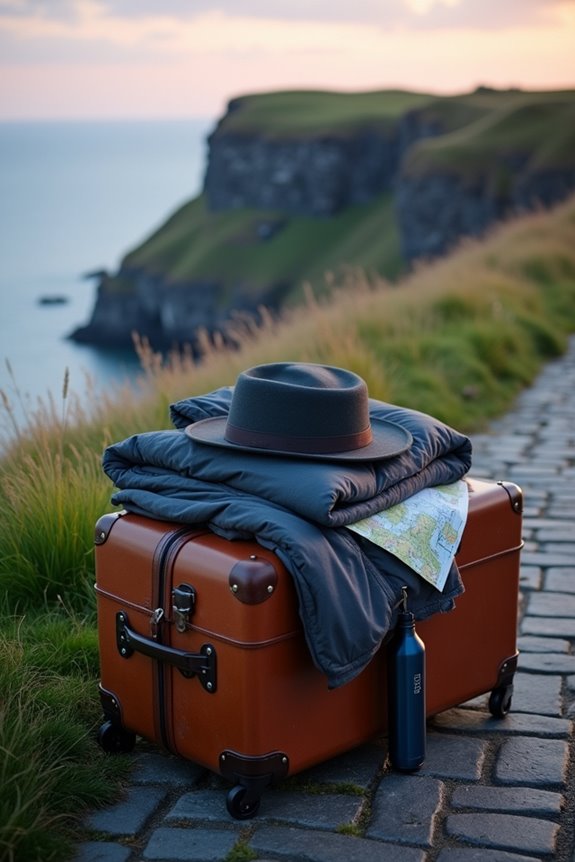
As temperatures drop once the sun dips below the horizon, you’ll want an extra layer that doesn’t consume your luggage space. A packable vest or fleece works well for May Ireland trips because it provides lightweight insulation without the bulk. I stuff mine into a tiny pouch, and it takes up almost no room in my backpack.
Why this matters:
- Transforms chilly evenings into comfortable moments
- Pairs well with your lightweight shirts and wool tees
- Compresses small enough for any travel bag
- Adapts quickly to Ireland’s unpredictable spring weather
- Layers effectively under your rain jacket
Cool evenings in coastal areas can catch you off guard, but a packable vest solves that problem. Having this single piece means you’re ready for whatever May Ireland throws at you without overpacking.
Select a Water-Resistant Day Bag for Excursions
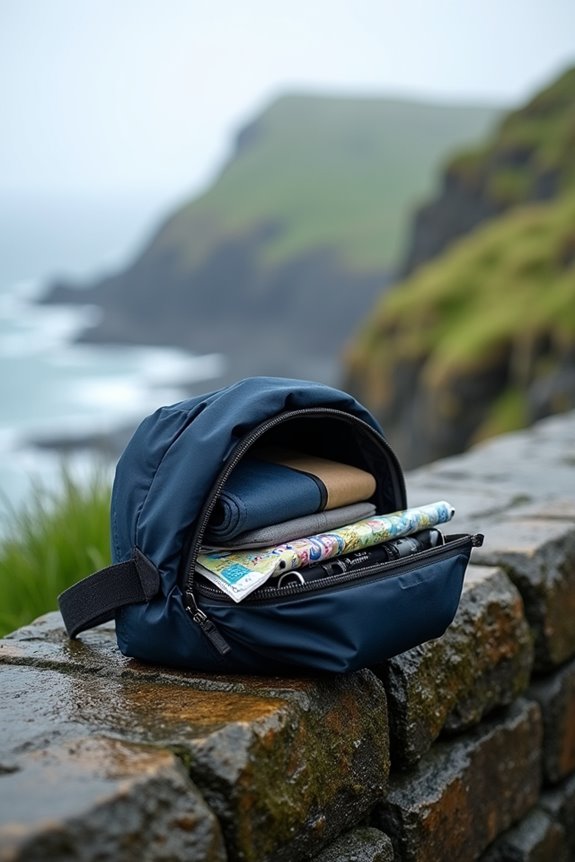
Once you’ve got your layers sorted, you’ll need a reliable bag to carry everything during your daily adventures around Ireland. I recommend choosing a water-resistant day bag with a coated exterior that’ll protect your belongings from those unpredictable spring showers. Look for a compact size: something that fits a light rain jacket, extra layer, water bottle, and essentials without weighing you down on cobblestones.
Weatherproof zippers matter more than you’d think when packing for Ireland travel. A crossbody design works best for me since it keeps my hands free while sightseeing and deters theft in crowded areas. A small sleeve for maps or travel guides proves genuinely helpful. Comfortable, lightweight straps make those long city walks considerably better. Your water-resistant day bag becomes your reliable companion throughout your Ireland packing adventure.
Wear Sunglasses and Sunscreen During May’s Long Daylight Hours
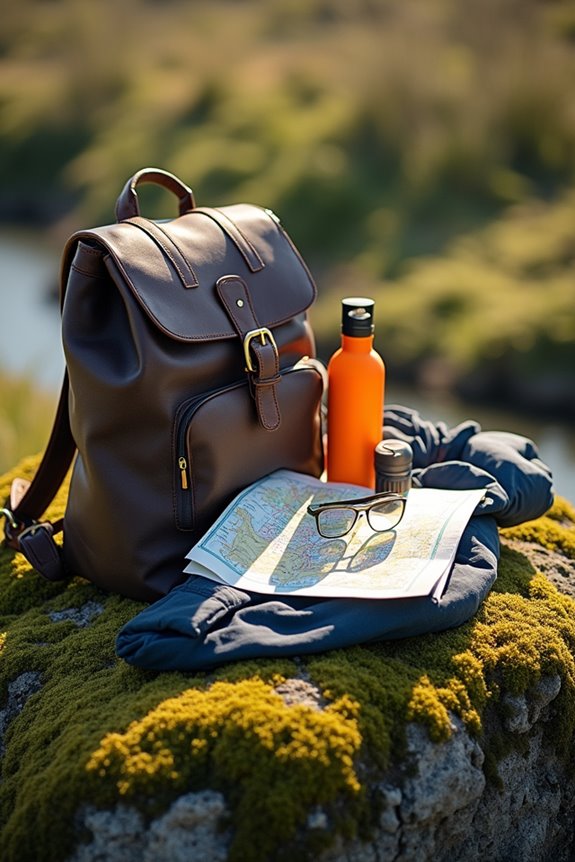
You’ll want to pack sunglasses and sunscreen because Ireland’s May daylight stretches from early morning to late evening, giving your skin significantly more UV exposure than you’d expect on a cloudy island. Even when it’s cool and gray out, those spring sun rays are stronger than they seem, and you’ll regret skipping protection during sunny breaks on hikes or by the coast where light reflects off water. A compact SPF 30+ sunscreen and a pair of shades fit easily into your day bag. They take up minimal space but provide real protection for a more comfortable trip.
Extended Daylight Exposure Protection
Why does May in Ireland feel like nature’s gift to outdoor enthusiasts? The long daylight hours (sunrise at 05:17 and sunset near 21:26) mean you’ll spend more time exploring. That’s exciting, but it also means extended UV exposure that I’ve learned to respect the hard way.
I pack sunglasses and sunscreen because protecting my eyes and skin matters when I’m outside all day. Here’s what I bring:
- Compact sunglasses that fit in my backpack pocket
- Travel-sized sunscreen for midday reapplication
- Lightweight long-sleeve shirts in neutral colors
- A wide-brimmed hat for coastal walks
- A packable UV-blocking layer
Protective clothing paired with these items guards against glare and sunburn during hikes. You’ll feel confident joining fellow travelers who’ve discovered Ireland’s May conditions while keeping yourself safe.
UV Rays During Spring Months
While those long daylight hours sound wonderful—and they are—they come with a real cost if I’m not careful about UV protection. I’ve learned the hard way that spring sun in Ireland isn’t something to ignore, even when clouds roll in. UV rays penetrate misty skies along coastal areas, and I’d rather not spend my trip looking like a lobster.
| UV Protection Item | Why I Need It |
|---|---|
| Polarized sunglasses | Reduces glare from water and cobblestones |
| Broad-spectrum sunscreen (SPF 30+) | Protects against UVA and UVB rays |
| Hat with brim | Shields face and scalp during hikes |
| Long-sleeve rashguard | Ideal for coastal walks and water activities |
| Lip balm with SPF | Often forgotten, easily burned area |
I reapply sunscreen every two hours during outdoor time, especially when exploring open landscape. This habit is necessary for effective protection.
Pack Wool Base Layers: Why They Beat Synthetics in Damp Climates
When you’re standing in an Irish drizzle at dawn, here’s what matters most: your base layer keeps working even when it’s wet. Wool base layers beat synthetics in damp climates because they’re moisture-wicking and stay warm even soaked through. Unlike synthetic materials, wool maintains its insulation when damp, which matters during May’s unpredictable weather.
Why wool wins:
- Keeps you warm when wet; synthetics fail here
- Natural odor resistance for multi-day trips
- Effective insulation from high 40s to mid-50s temperatures
- Dries slower but performs better in moisture
- Works with Ireland’s oceanic climate perfectly
Pack a merino wool base layer, and you’ll belong to the smart travelers who understand Irish springs. Your body will thank you when rain turns your morning hike into something more demanding than expected.
Fold a Trench Coat or Packable Shell Into Your Daypack
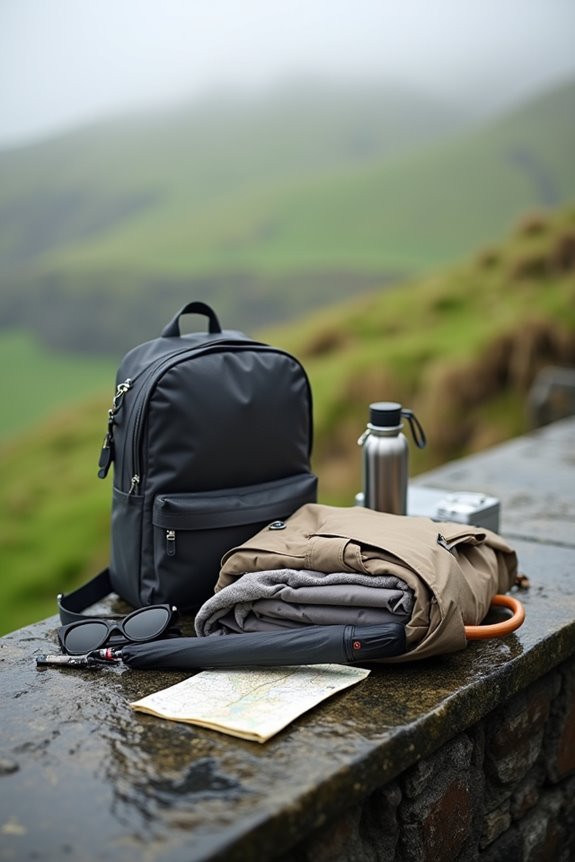
A packable shell or water-repellent trench coat serves as your practical asset for May in Ireland, protecting you from rain while exploring. These layers fold into their own pouches and fit compactly in your daypack without consuming space. Unlike umbrellas that become cumbersome on trails, a packable shell functions effectively everywhere, from navigating Dublin streets to hiking coastal paths.
| Layer Type | Weight | Packability | Best For |
|---|---|---|---|
| Packable Shell | Lightweight | Folds to fist-size | Sudden rain showers |
| Trench Coat | Medium | Compact roll | Town and light hikes |
| Waterproof Jacket | Varies | Good fold | Active outdoor use |
| Umbrella | Light | Bulky | Stationary moments |
Keep your waterproof jacket accessible without the added bulk. Select a neutral color such as navy or tan that coordinates with the rest of your packed items.
Bring a Water Bottle; Skip the Umbrella for Good
Your packable shell keeps you dry during downpours, but you’ll also need to stay hydrated while exploring Ireland’s countryside in May. I ditch the umbrella because waterproof outerwear handles light rain better, and an umbrella simply gets in the way. Instead, I pack a collapsible water bottle that fits easily into my daypack alongside my trench coat.
This approach offers several practical benefits:
- Stay refreshed during longer May daylight hours
- Reduce luggage clutter on day trips
- Access water fountains in towns and cities easily
- Prepare for sun, showers, and wind simultaneously
- Keep hands free for hiking and sightseeing
Water access is common throughout Ireland, so I don’t need to buy bottles constantly. Packing light means carrying what actually protects me. A reusable bottle does exactly that while supporting my adventure without unnecessary weight.