

Iceland’s weather shifts faster than you can say “thermal socks,” so layering is your best friend. Start with a merino wool base layer that actually wicks sweat, add a fleece mid-layer for warmth, then top it with a windproof shell. Waterproof hiking boots with solid grip are essential, and winter accessories matter: a balaclava, insulated gloves, and a warm hat all serve important functions. What works best for October versus February does differ in meaningful ways.
Master the Three-Layer Dressing System: Base, Mid, and Shell
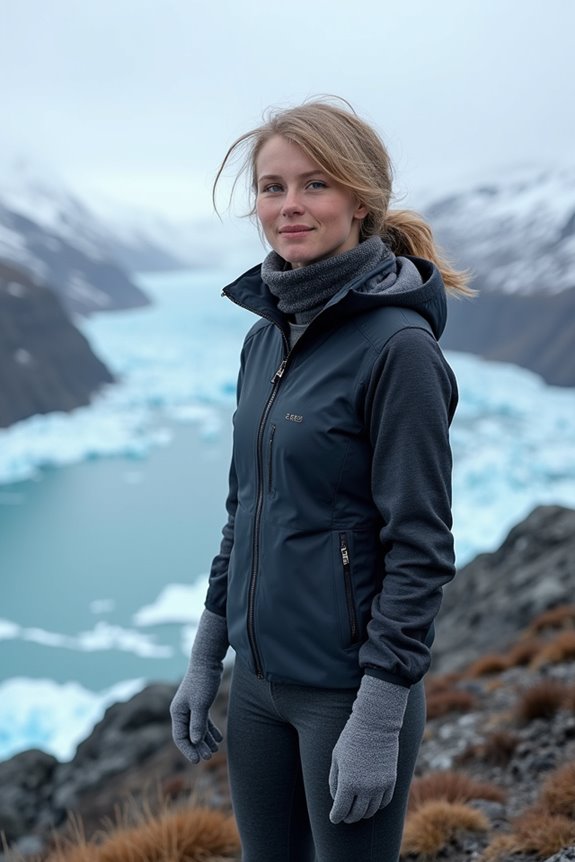
How do you stay warm when Iceland throws wind, rain, and cold at you all at once? The answer is the three-layer system.
Start with a moisture-wicking base layer made from merino wool or synthetic fabrics. Cotton holds moisture and creates discomfort, so skip it entirely. Next, add a mid-layer like fleece or wool that traps warm air without restricting movement. Finally, pull on a windproof, waterproof shell layer to shield against Iceland’s brutal conditions.
This approach offers flexibility. As conditions shift, you can quickly add or remove layers to stay comfortable. Quick-drying base and mid-layers paired with a breathable outer layer keep you dry and warm. The difference is straightforward: with proper layering, you enjoy Iceland. Without it, you’re simply surviving it.
Choose Quick-Drying Fabrics: Why Merino Wool and Synthetics Beat Cotton and Denim
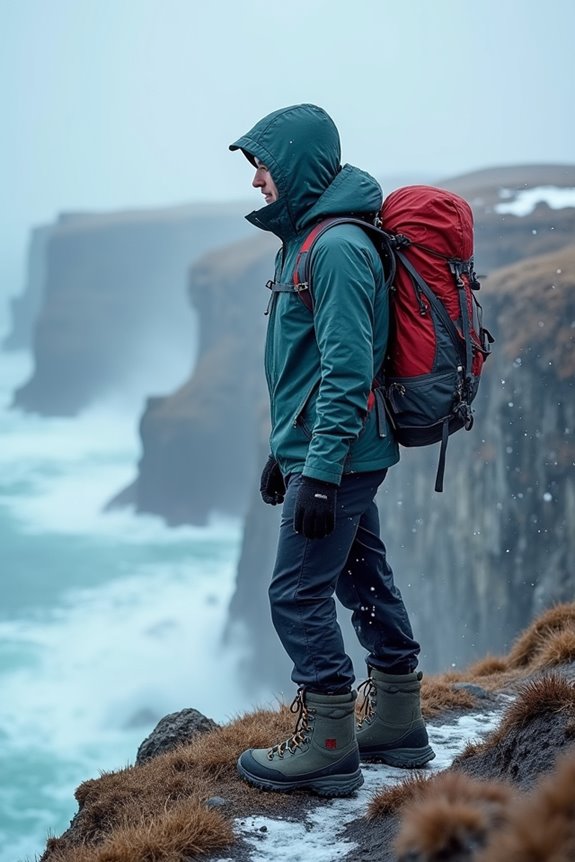
Layering’s only half the battle; you also need to pick the right fabrics, since not all materials handle Iceland’s wet, windy conditions equally. Merino wool and synthetic fibers work best in these environments. These quick-drying fabrics wick moisture away from your skin, keeping you dry when rain hammers down. Cotton and denim absorb water like sponges and take forever to dry, leaving you cold and miserable.
Your base layers need moisture-wicking properties to function properly. Breathable materials in your mid-layers trap warmth while letting dampness escape. When you layer a windproof outer shell over quality base and mid-layers, you’re prepared for Iceland’s unpredictable conditions.
Selecting the right fabrics determines whether layering actually works. Without them, even the most carefully assembled outfit will fail to protect you.
Layer by Season: What to Pack for October, December, and February
What you’re packing in October won’t cut it in February, and that’s exactly why Iceland demands a seasonal approach to dressing.
| Month | Essential Layers |
|---|---|
| October | Moisture-wicking base, insulating mid-layer, waterproof shell |
| December | Base layer, thermal socks, puffer jacket, snow pants |
| February | Base layer, balaclava, waterproof gloves, quick-drying outerwear |
| All Months | Windproof shell, warm accessories, traction devices |
| Terrain | Crampons for icy surfaces |
Layering is your best friend in Iceland. Start with a moisture-wicking base layer that pulls sweat away, add an insulating mid-layer for warmth, then top everything with a windproof shell. In October, waterproof outerwear and a beanie keep you dry. December demands snow pants and wool-lined socks. February’s sleet calls for waterproof gloves and a balaclava. Don’t forget traction devices for icy terrains; they’re essential when stability matters most.
Select Waterproof Hiking Boots With Proper Grip and Ankle Support
While you’re busy layering your torso and extremities, don’t forget that your feet are doing the heaviest lifting on Iceland’s trails. Waterproof hiking boots with solid ankle support genuinely protect you from injuries on uneven terrain. You’ll want boots with excellent grip because slippery rocks and muddy patches are everywhere here. Look for breathable, moisture-wicking designs that work well with layering socks without overheating your feet. Breaking in new boots before your trip saves you from brutal blisters during glacier hikes. In winter months, choose sturdy boots compatible with crampons or traction devices for weather resilience on icy surfaces. Investing in the right footwear transforms Iceland’s challenging landscape from intimidating to manageable, letting you explore confidently alongside fellow adventurers.
Bundle Your Hands, Head, and Neck: Winter Accessories That Actually Matter
Your head, hands, and neck are basically Iceland’s favorite targets for cold, and I’ve learned the hard way that protecting these spots makes the difference between enjoying yourself and suffering through every hike. I pack multiple neck coverings: a lightweight buff, scarf, and balaclava so I can adapt quickly when wind picks up. A warm hat and insulated gloves keep my extremities from freezing, while waterproof gloves over them prevent moisture buildup during trekking.
| Accessory | Why It Matters |
|---|---|
| Warm hat | Prevents heat loss from your head |
| Insulated gloves | Maintains finger warmth on icy trails |
| Neck gaiter | Shields against harsh wind chill |
I always apply lip balm with SPF since dry air and snow reflection damage my lips. Layering moisture-wicking base layers under windproof outerwear helps regulate temperature effectively. Your future self will thank you for these choices.