

Packing for Aspen requires smart layering rather than excessive bulk. Start with moisture-wicking base layers made from synthetic or merino wool, then add fleece sweaters and a waterproof ski jacket to handle temperature swings between the 60s and mid-30s. Waterproof boots with thick soles work well on cobblestone streets, while insulated gloves, a warm hat, and a neck gaiter provide essential protection. Hand and toe warmers prove useful for skiing. Pack nicer clothing for downtown dinners, and consider shipping bulky gear ahead to local shops to minimize what you carry. Each piece serves a specific purpose in adapting to Aspen’s variable conditions.
Prepare for Aspen’s Dramatic Weather Swings
Aspen’s weather will test your packing decisions in ways you might not expect. Early October brings wild swings: sunny 60s during the day, then mid-30s after sunset. Your packing list needs flexibility to handle this reality.
The key is layering. Bring flannel shirts, a mid-weight lined jacket, and an unlined jacket so you can adjust as temperatures shift. A winter vest adds core warmth without bulk. You’ll find yourself adding layers in early morning, shedding them by afternoon, then bundling up again when the sun dips.
This isn’t overcomplicating things; it’s smart preparation. These weather swings are typical in Colorado’s Rockies. Having the right pieces means you’ll stay comfortable while exploring rather than being stuck indoors shivering or overheated.
Pack Base Layers for Aspen’s Temperature Swings
Why do base layers matter so much when you’re dealing with Aspen’s wild temperature swings? The right base layers keep you comfortable throughout the day. You’ll want to pack one to four non-cotton tops and bottoms made from synthetic or merino wool instead. These materials are moisture-wicking, which keeps you dry when you’re sweating during a hike, then warm when temperatures drop at sunset.
The key is choosing thin, breathable pieces that won’t bulk up under your jacket. This layering approach means you can shed or add pieces as needed without carrying around heavy gear. Having proper base layers makes those unpredictable early October days manageable rather than frustrating.
Add Mid-Weight Insulation: Fleece and Wool Sweaters
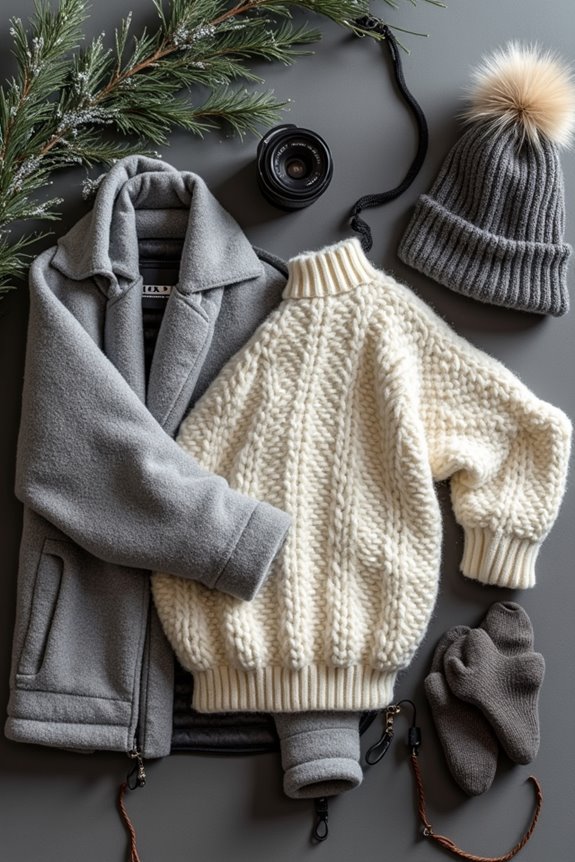
Once you’ve got your moisture-wicking base layers sorted, you’ll want to add a mid-weight insulation layer on top. Fleece sweaters and wool sweaters keep you warm without the bulk of heavy outerwear.
Wool blends outperform cotton because they manage moisture and maintain comfort when conditions turn damp or snowy. Fleece sweaters provide the right combination of warmth and flexibility for activities ranging from hiking mountain trails to casual dinners around town.
Pack one to four mid-weight sweaters based on your itinerary. Layer them with a lined jacket for chilly mornings and cooler evenings to create a system that handles Aspen’s temperature fluctuations effectively.
Layer Waterproof Outerwear for Snow and Rain
When heading to Aspen, pack 1 to 3 waterproof ski jackets because mountain weather shifts rapidly and layering reliable protection over base layers and fleece becomes essential. Choose jackets in neutral colors like black or navy; these handle sudden snow or rain without excess weight, and confirm they’re waterproof rather than water-resistant. Multiple jackets allow you to switch between options depending on conditions, whether facing wet slush or dry powder, which directly impacts comfort during your day on the mountain.
Waterproof Jacket Essentials
How do you stay dry when Aspen’s weather shifts from sunny afternoons to sudden snow? I pack one to three waterproof ski jackets because they’re your best defense against unpredictable conditions. Here’s what I’ve learned: a solid layering system starts with waterproof outerwear as your outer shield. Pair each jacket with non-cotton base layers underneath. They wick moisture away and keep you warm when temperatures drop. A mid-weight lined jacket handles those tricky transition moments between morning chill and afternoon sun quite well. For lighter daytime hours, an unlined jacket works great. A winter vest adds core warmth without the bulk. I only consider a parka if forecasts promise seriously cold nights. The key is having options so you’re comfortable, not overdressed.
Layering For Variable Conditions
The real trick to staying comfortable in Aspen’s unpredictable weather is building a layering system you can adjust throughout the day. I’ve learned that starting with a breathable base layer, then adding a mid-weight jacket, gives me flexibility when temperatures swing. The waterproof outer shell comes next, protecting me from snow and sleet while keeping insulated layers underneath dry.
On colder days, I’ll slip a winter vest over my base layers before zipping up my outer shell. Flannel mid-layers work well because they breathe while keeping me warm during activity. I skip the heavy parka unless forecasts show extended cold or nighttime exposure. This approach means I’m never overdressed or shivering, which beats arriving unprepared.
| Layer | Purpose | Material |
|---|---|---|
| Base | Moisture-wicking | Merino wool |
| Mid-weight | Insulation | Fleece |
| Vest | Core warmth | Down |
| Shell | Protection | Waterproof nylon |
| Adjustment | Flexibility | Easy removal |
Snow And Rain Protection
Why settle for being damp and miserable when you’re out enjoying Aspen’s mountains? I’ve learned that waterproof outerwear is your best friend here. I pack one to three waterproof ski jackets because mountain weather shifts fast, and layering them gives me flexibility. When I’m caught between snow showers and rain, having quality waterproof layers keeps me comfortable and lets me stay outside longer.
I also grab waterproof gloves or mittens plus a neck gaiter for wind protection. These pieces work together as my shield against harsh conditions. I love how a mid-weight lined jacket pairs with an unlined one for different temperature swings. If forecasts show heavy snow or cold nights, I’ll throw in a parka. Smart waterproof choices mean I’m actually enjoying Aspen instead of rushing back inside.
Pack Gloves, Hats, and Neck Protection
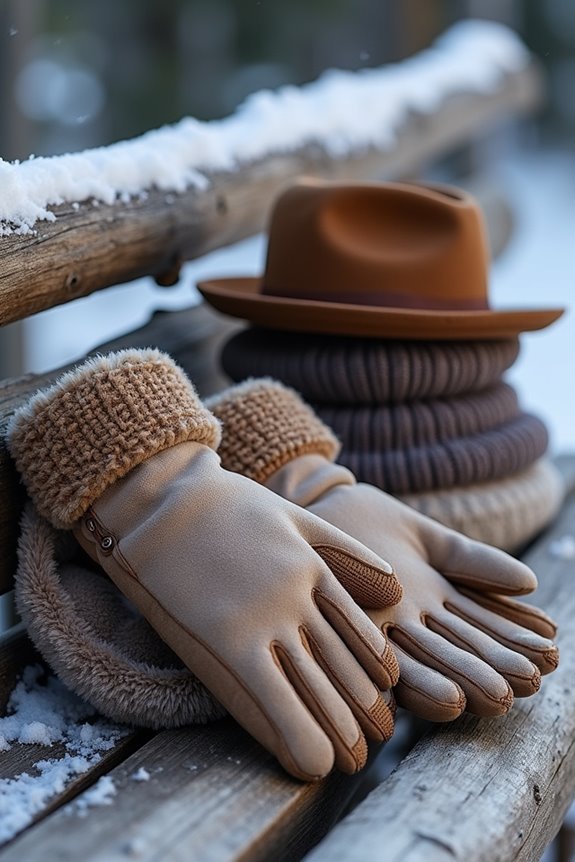
When you’re heading to Aspen, especially in early fall, you’ll quickly realize that gloves, a warm hat, and neck protection aren’t optional. They’re survival gear.
Start with waterproof, insulated gloves. Damp mornings and evenings in the mid-30s to 40s will test any bare hand. Skip cotton; it soaks up moisture and leaves you miserable.
Next, pack a warm winter hat. Wind whips across those cobblestone streets hard, and your head loses heat fast.
Finally, throw in a non-cotton neck gaiter or balaclava. It shields your face while you’re skiing or just walking around town when the temperature drops suddenly.
These three pieces layer perfectly with fleece vests and wool sweaters, creating solid protection. Weather shifts quickly here, so having this dedicated cold-weather set keeps you comfortable when conditions change unexpectedly.
Select Proper Footwear for Cobblestones and Slopes
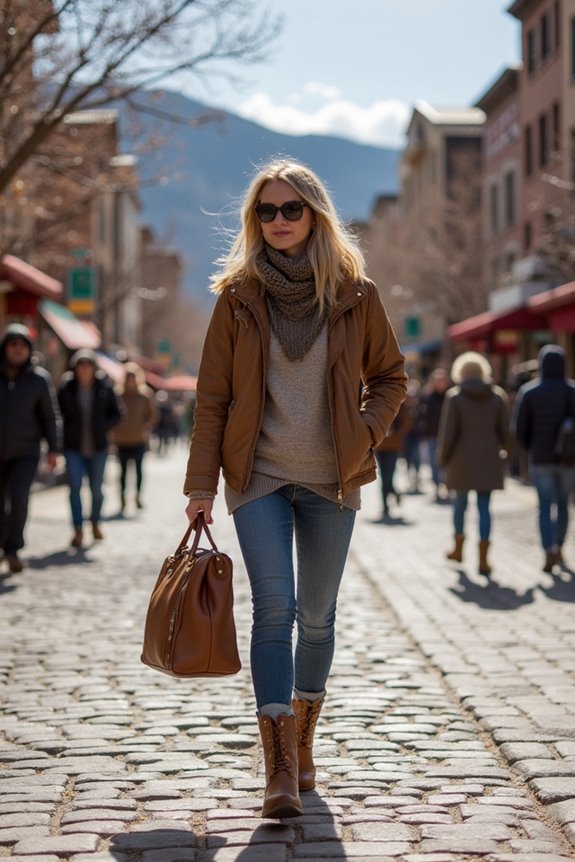
I’ve learned that cobblestones and Aspen’s sloped streets demand footwear you can actually trust, so I always pack shoes with thick soles and serious grip to keep my feet from sliding around. If you’re planning to wear heels, and I understand the appeal, choose ones with chunky soles rather than thin ones, because wobbling on uneven pavement creates balance problems. Don’t forget proper ski boots if you’re hitting the slopes, but also bring a comfortable pair of cushioned everyday shoes so your feet have somewhere to recover after all that walking and exploring.
Cobblestone Street Navigation
Ever noticed how your feet feel wobbly on those uneven cobblestone streets downtown? Choosing the right shoes makes a real difference when exploring Aspen. You’ll want sturdy walking shoes with thick soles and excellent grip to handle those tricky surfaces safely.
| Footwear Type | Why It Works | What to Avoid |
|---|---|---|
| Ankle-supporting boots | Stabilizes uneven ground | Ultra-flexible flats |
| Ski boots | Provides warmth and grip | Thin-soled heels |
| Block-heel styles | Improves stability on stones | Smooth-bottomed shoes |
Pair closed-toe shoes with wool ski socks to keep your feet warm and reduce slipping. Break in new footwear before your trip to prevent blisters during day-long downtown explorations. Your feet will appreciate the comfort when navigating Aspen’s charming streets.
Ski Boot Essentials
The right ski boots solve two problems at once: they keep your feet stable on icy downtown cobblestones and provide the support you need on the slopes. Choose waterproof footwear with snug ankle support and good tread. This matters because you’re walking between town and the mountain, so your ski boots need to handle both environments.
Look for insulated options that won’t leave your feet cold during long days. Thicker soles help significantly on uneven cobblestones. Pair quality ski boots with thermal base layers underneath for improved warmth.
Consider boots you can easily pack between downtown and MOLLIE Aspen. Compact boot warmers fit in your bag for extra comfort after slope time. When you invest in proper ski boots, you’re investing in how you’ll actually experience Aspen.
Heel Sole Thickness
While your ski boots handle the slopes beautifully, you’ll also need to think about what carries you around town, and that’s where sole thickness becomes important. Thicker boot soles perform better on Aspen’s uneven cobblestones. When I choose waterproof footwear with robust tread patterns, I feel confident exploring downtown without worrying about slipping. Thin soles don’t provide adequate protection here; they leave you vulnerable to twisted ankles and unstable footing.
Look for boots with substantial traction and soles designed for irregular surfaces. The extra cushioning protects your feet during long days of walking between shops and restaurants. I prioritize insulated, waterproof options that handle chilly, damp weather while keeping my steps steady. Your feet will benefit from practical footwear that works everywhere Aspen takes you.
Bring Your Skis, Boots, and Safety Gear
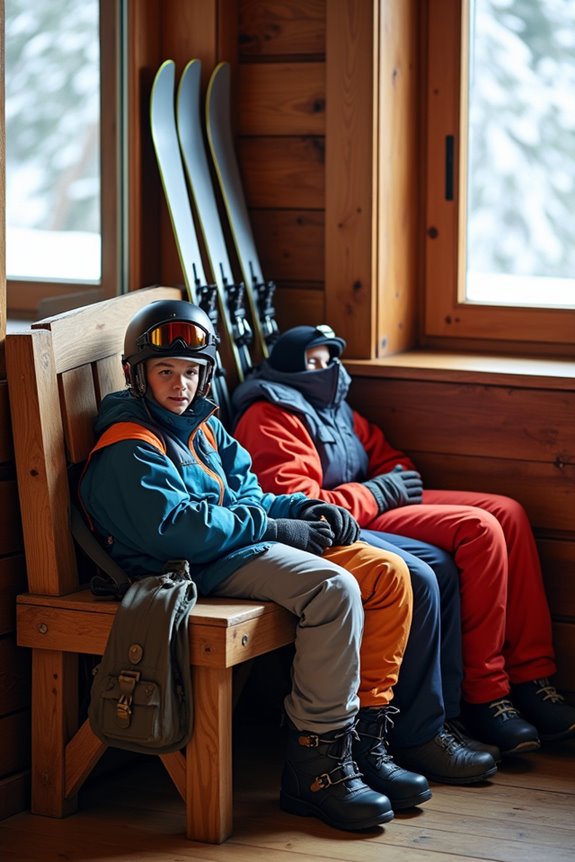
If you’re planning to hit Aspen’s slopes, bring your own skis and boots or snowboard and boots. They’re essential for making the most of your time on the mountain. Having gear that fits your feet properly makes a noticeable difference in comfort and performance.
Don’t forget your helmet and goggles. Safety equipment protects your head and eyes from wind, cold, and unexpected falls. You’ll see plenty of other skiers wearing theirs.
For layering underneath, pack non-cotton base layers that wick moisture away from your skin. Bring at least two sets so you can swap them out when they get damp. Add waterproof gloves and a neck gaiter as well. Your fingers will appreciate the protection when temperatures drop.
Pack Nicer Outfits for Dinners and Downtown

When you’re heading downtown for dinner, I’d recommend packing outfits that are polished but still comfortable. Consider smart sweaters or blazers paired with well-cut tops that suit Aspen’s elevated casual vibe. Since you’ll be walking on those charming cobblestone streets, wear shoes with thicker soles or comfortable flats rather than thin heels, which can feel awkward on uneven pavement. Layer a mid-weight jacket over your outfit so you can easily transition from exploring outside to looking put-together when you arrive at restaurants.
Elevated Casual Dress Code
How do you dress for a mountain town that balances adventure with sophistication? Aspen’s elevated casual dress code requires moving away from overly formal wear while maintaining a polished appearance. Smart-casual pieces work best, paired with warm layers such as sweaters and mid-weight jackets for evenings when temperatures drop without warning.
| Outfit Type | Key Pieces | When to Wear | Why It Works |
|---|---|---|---|
| Daytime | Jeans, fitted top, cardigan | Downtown exploring | Comfortable yet intentional |
| Dinner | Neutral pants, silk blouse, blazer | Evening restaurants | Matches upscale-casual vibe |
| Layering | Sweater, jacket, thermal base | Outdoor dining | Adapts to temperature shifts |
| Footwear | Waterproof ski gear, boots | Cobblestone streets | Prevents slipping, stays dry |
This approach allows you to move seamlessly from morning strolls to sophisticated dinners without appearing overdressed or unprepared.
Footwear For Cobblestone Streets
Aspen’s charming downtown sits on uneven cobblestone streets that demand more from your shoes than you’d expect, so pack footwear specifically designed for this terrain. Waterproof shoes with thick soles provide the stability and grip needed when exploring. Traction footwear handles both wet cobbles and potential winter slush around dining districts effectively.
Choose closed-toe options that transition smoothly from daytime sightseeing to evening meals, avoiding the need to juggle multiple pairs. Waterproof uppers protect your feet from snowmelt while strolling around the area. When packing for a ski trip, remember that versatile shoes serve double duty: they’re practical for uneven streets while remaining appropriate for nicer dinners.
Select footwear that balances function with appearance. Your feet will benefit from thoughtful preparation, and you’ll navigate downtown with confidence.
Use Hand and Toe Warmers for Extended Outdoor Activity
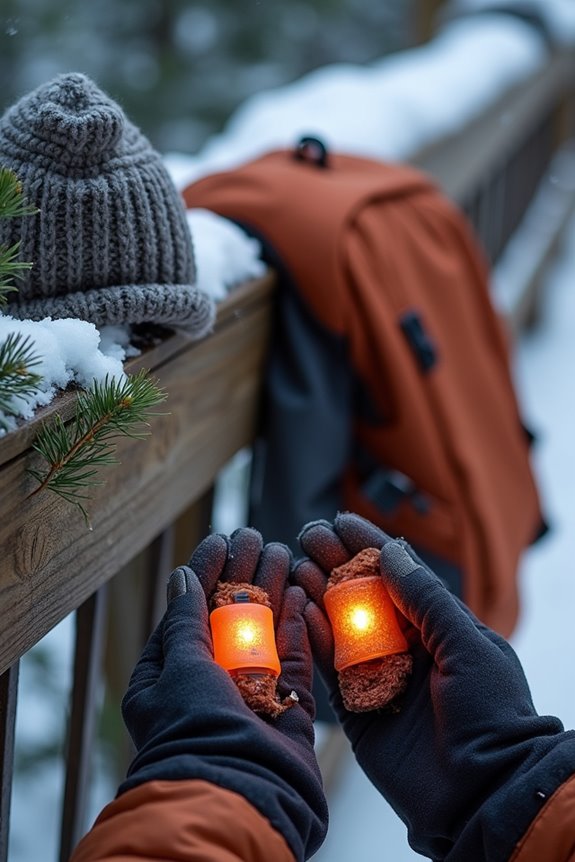
If you’re planning to spend hours outside exploring Aspen’s trails or catching early-morning views, hand and toe warmers are effective tools for maintaining comfort. I pack 1 to 7 packs depending on how long I’ll be out there. Slip toe warmers inside your boots and tuck hand warmers into your gloves or pockets to maintain warmth during long outdoor activity.
Disposable warmers offer genuine convenience. They work well for quick heat boosts during hikes or sleigh rides when temperatures drop fast after sunset. I carry extra packs in a small travel pouch so I can replenish warmth throughout the day as needed.
When you combine warmers with proper layering, you’re well-equipped for extended outdoor activity in Aspen’s cold environment.
Streamline Packing: Ship Luggage Ahead and Know Your Backup Options
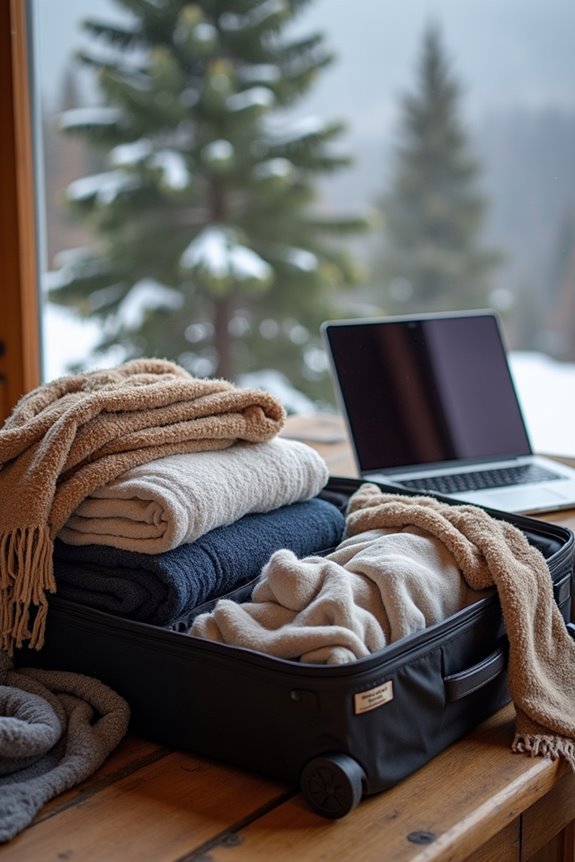
Once you’ve got your base layers and warmers sorted, you can lighten your load before you even arrive in Aspen. I ship my ski gear and heavier suitcases directly to MOLLIE Aspen ahead of time. This keeps me from lugging waterproof jackets and boots through airports. If something doesn’t make the journey or I forget an essential piece, I have backup options waiting for me.
Four Mountain Sports stores scattered around town stock replacement gear. The Boutique at MOLLIE handles last-minute essentials, and Aspen Collection locations offer additional finds. This approach removes packing anxiety because I know I’m not completely stuck if I need something. Your arrival experience becomes smoother when you’re not weighed down by everything at once.